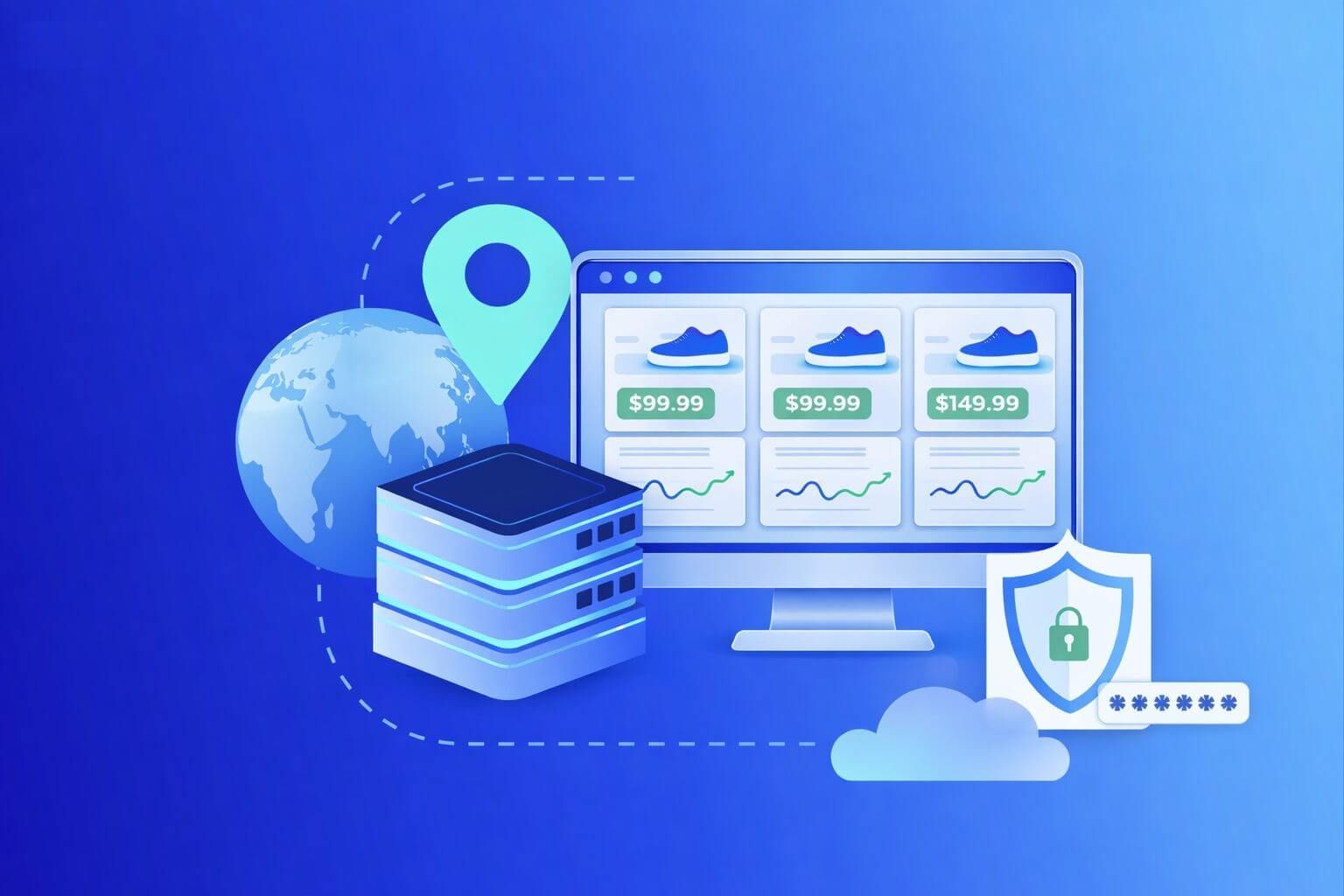
Best Proxy Setup for SEO Rank Tracking in 2026

Your rank tracker is only as good as the data it can fetch. In 2026, search engines tighten anti-bot controls, localize more results, and shift layouts often. If your proxies break, you lose accuracy and waste budget. This guide shows how to design proxies for SEO rank tracking that are stable, measurable, and cost-aware. What you’ll get: a production-ready setup, signals to monitor, and concrete decisions you can implement.
The best proxy setup for SEO rank tracking in 2026 uses a mixed pool: city-targeted residential for strict geos and high-risk queries, high-quality datacenter for bulk volume, session pinning for local intents, conservative rotation, and adaptive retries. Pair this with per-engine request profiles, geo validation, and KPIs like block rate, CPSR, and captcha rate to control cost and accuracy.
Why rank tracking now requires a smarter proxy mix
SERPs are more personalized by location and device. Anti-bot systems throttle repeated patterns fast. Simple rotation at high speed looks like abuse and gets blocked. You need the right IP type per job, matched headers, and measured concurrency.
From a business angle, inaccurate ranks distort channel ROI and budget. From an engineering angle, unstable proxies inflate retries, parsing errors, and support tickets. The fix is a measured setup, not only more IPs.
Core design principles for resilient SERP collection
- Use geo-targeted IPs. Country is not always enough. Many SERP elements rely on city or metro. If you cannot target city, at least validate the exit IP’s city before running sensitive queries.
- Match device and language. A user agent is not a device profile. Align UA, viewport, Accept-Language, and localization params (e.g., Google’s hl, gl, and uule) to the rank you want to measure.
- Pin sessions when location matters. Session pinning means reusing the same IP for a small batch of related queries. It reduces suspicious churn and keeps local packs consistent.
- Rotate with intent. Rotate between batches, not between every request. Over-rotation looks noisy and triggers risk models.
- Set per-engine concurrency. Each engine tolerates different speeds. Start low and ramp based on block rate.
- Validate geo before you fetch. Query a geo-IP endpoint from the proxy to confirm the city/region matches the target.
For broader background on where proxies fit across tasks, see these practical proxy use cases that overlap with SEO and automation.
Choosing the right proxy types for rank tracking
Different proxy types solve different problems. The trick is using the cheapest reliable option first and escalating only when you hit resistance.
- Datacenter: fastest and lowest cost per request. Good for non-strict markets and engines with lighter controls.
- Residential: real ISP IPs with strong geo accuracy. Better for city-level rank checks, local packs, and stricter engines.
- Mobile: niche. Useful for very hard markets and mobile-only features, but often not required for standard rank tracking.
| Situation | Recommended proxy | Why |
|---|---|---|
| High-volume, broad markets, low block rate | Datacenter | Low cost, high throughput |
| City-precise tracking, local packs/maps | Residential | Better geo signals, fewer WAF flags |
| Aggressive anti-bot on mobile SERPs | Mobile or Residential | Mobile ASN or stronger residential diversity |
| Bursty jobs with flexible timing | Datacenter first, escalate on block | Keep CPSR low, escalate only when needed |
If you’re planning bulk volume across many markets, start by evaluating high-quality datacenter proxies for the baseline. Then add a residential tier for strict geos and fallback.
Proxies for SEO rank tracking: when to use which
Use datacenter for stable, national-level ranks and engines that tolerate speed. Switch to residential when you need city-level accuracy, see rising captcha rates, or detect layout differences by location. Reserve mobile for edge cases you cannot unlock with residential.
A practical architecture blueprint
Design your system so it adapts in real time instead of hard-coding one proxy pool.
- Classify queries by engine, market, device, and location precision needed. Tag each with a default proxy type and a fallback.
- Build per-engine request profiles. Define headers, cookies, localization params, and a pacing plan.
- Implement geo validation. Before a batch, confirm the proxy’s city/region via a lightweight IP-geo call.
- Session policy. Pin an IP for a small related set (for example, 10–25 queries for one city/device) and rotate between sets.
- Concurrency caps. Start with 0.5–1 rps per egress IP per engine. Increase only when block rates remain stable.
- Retry logic. Use exponential backoff. Don’t retry on hard blocks with the same IP. Switch type if two consecutive hard blocks occur.
- Storage and dedupe. Hash query + params + location + device so retries do not create duplicates in reports.
Implementation note: keep a “proxy director” that routes each job to the right pool based on signals (geo need, block rate trend, cost ceiling). This reduces manual tuning.
Monitoring and KPIs that actually move ROI
Track these signals and make routing decisions from them:
- Block rate: percentage of requests failing due to blocks or anomalous pages. Measure by detector rules (e.g., captcha page, soft 302s, or missing organic block).
- CPSR (cost per successful request): total proxy spend divided by valid SERPs saved. Use this to tune when to escalate to residential.
- Geo accuracy: city/region of the exit IP vs. the target. Log a mismatch rate.
- Session stability: how often a pinned session completes a batch without block. Signals weak or over-aggressive rotation.
- Captcha rate: track appearance per 1,000 requests by engine and market.
- SERP completeness: percent of pages with expected elements (e.g., organic results parsed, total results > 5).
Example targets to validate in a pilot (not universal, tune for your stack):
- Block rate under 3–5% per market using default proxies.
- CPSR below your budget threshold when 80%+ queries run on datacenter.
- Geo mismatch under 2% for city-targeted runs.
- Captcha rate stable and predictable by engine.
Real-world scenarios
Global retail brand, 120k keywords, 30 cities per country. National ranks run fine on datacenter early morning local time. City-level runs hit soft blocks and captchas. Switching those batches to residential proxies and pinning sessions per city cut blocks, while keeping most volume on cheaper datacenter.
Fintech startup, heavy mobile SERP focus in a strict market. Datacenter works for Bing, but Google mobile returns thin pages and frequent captchas. Moving only the Google mobile jobs to residential with mobile-like headers stabilized results without touching the Bing flow.
Watch out for this
- Over-rotation. Rotating every request looks noisy. Rotate per batch, not per call.
- Wrong localization. Missing or mismatched hl, gl, or uule on Google leads to misleading ranks. The same goes for Accept-Language and region-specific query params on other engines.
- Mixed device signals. A mobile UA with desktop viewport can get flagged or return different layouts.
- Retry storms. Blind retries on the same IP train anti-bot models. Back off and switch type when you detect a hard block.
- No geo validation. Assuming city-level targeting works without a check produces silent accuracy drift over time.
Cost control without losing accuracy
You can keep accuracy high without letting proxy costs sprawl. Use a tiered approach and measure CPSR.
- Default to datacenter for broad, low-risk jobs. Escalate to residential only when block rate or captcha rate crosses a threshold you set.
- Schedule for off-peak hours per geo where possible. Lower pressure often means fewer blocks.
- Cache and dedupe. If your reporting window tolerates it, reuse recent results for unchanged SERPs to reduce calls.
- Separate critical and non-critical jobs. Run core keywords first with safe settings; experiment on the long tail with tighter budgets.
If you need to budget scenarios and compare tiers, review provider plans and pricing alongside your CPSR targets to decide where escalation remains ROI-positive.
Implementation checklist
Use this short checklist when building or refactoring your rank tracking pipeline:
- Define per-engine request templates with headers, params, and device profiles.
- Implement a proxy director with rules: default type, fallback type, escalation triggers.
- Add geo validation before city-level batches. Fail fast on mismatch.
- Pin sessions for local runs; rotate between batches.
- Start safe on concurrency; raise only when block rate is steady.
- Track KPIs: block rate, CPSR, geo accuracy, captcha rate, SERP completeness.
- Run a two-week pilot, then lock in thresholds and autoscaling rules.
Frequently Asked Questions
How many proxies do I need for 10,000 daily keywords?
Capacity depends on concurrency and tolerance of each engine. Start with a small pool that keeps block rate and captcha rate stable at 1–2 rps per exit IP. Scale pool size based on observed block rate and CPSR during a pilot.
Should I use one proxy provider or multiple?
A single reliable provider can be fine if it covers your target countries and cities. If you serve many strict markets, consider a secondary provider for failover and diversification. Keep routing logic provider-agnostic so you can switch without code churn.
How do I know if my location targeting is correct?
Log the proxy exit IP and resolve it to city/region before each batch. Compare to your target. Also inspect SERP signals like map pack location labels. If mismatch rates rise, pause that batch, switch pool, and re-validate.
What’s the best rotation strategy for local SERPs?
Pin an IP per city/device batch, then rotate to a fresh IP for the next batch. Avoid per-request rotation. If you hit a hard block, retire that IP and switch to a new one or escalate to residential for that city.
How do I reduce captcha frequency?
Lower concurrency, improve header consistency, and pin sessions for local runs. If captchas persist, promote affected batches to residential. Track captcha rate by engine and market, and trigger escalation when it rises above your threshold.
Is residential mandatory for accurate rank tracking?
Not for all markets. Many national-level checks run fine on datacenter. Residential helps with strict geos, local packs, and engines that weigh ISP signals. Use it selectively based on measured block rate and geo accuracy.
How should I budget for proxies?
Use CPSR (cost per successful request) as your main guardrail. Set a ceiling per market and device type. Start with datacenter to keep CPSR low, and escalate only when block rate or accuracy dip below your targets.
What compliance considerations should I keep in mind?
Ensure your data collection respects provider terms and applicable laws. SERP access can vary by region. Keep clear documentation of purpose, data fields collected, and how you handle opt-out or restriction requests.
Wrapping up and next steps
The winning setup in 2026 is not a single pool—it’s a routing strategy. Use datacenter for volume, residential for strict geos and stubborn blocks, session pinning for locality, and measured concurrency. Track block rate, CPSR, geo accuracy, and captcha rate so the system adapts rather than breaks.
Next steps:
- Run a two-week pilot in 3 markets with both proxy types.
- Validate geo accuracy and SERP completeness on a sample of keywords.
- Set escalation triggers based on block and captcha rates.
- Tune concurrency and session policies, then lock your defaults.
If you want deeper dives on proxy selection, rotation policy, and SERP-specific nuances, explore SquidProxies’ technical guides and use case resources. With the right plan, proxies for SEO rank tracking become predictable, accurate, and cost-effective.
About the author
Elena Kovacs
Elena Kovacs works at the intersection of data strategy and proxy infrastructure. She designs scalable, geo-targeted data collection frameworks for SEO monitoring, market intelligence, and AI datasets. Her writing explores how proxy networks enable reliable, compliant data acquisition at scale.